Qi Dong
2008-2009:
Portfolio of Kevin Brown
Welcome to the Museum of Calligraphy:
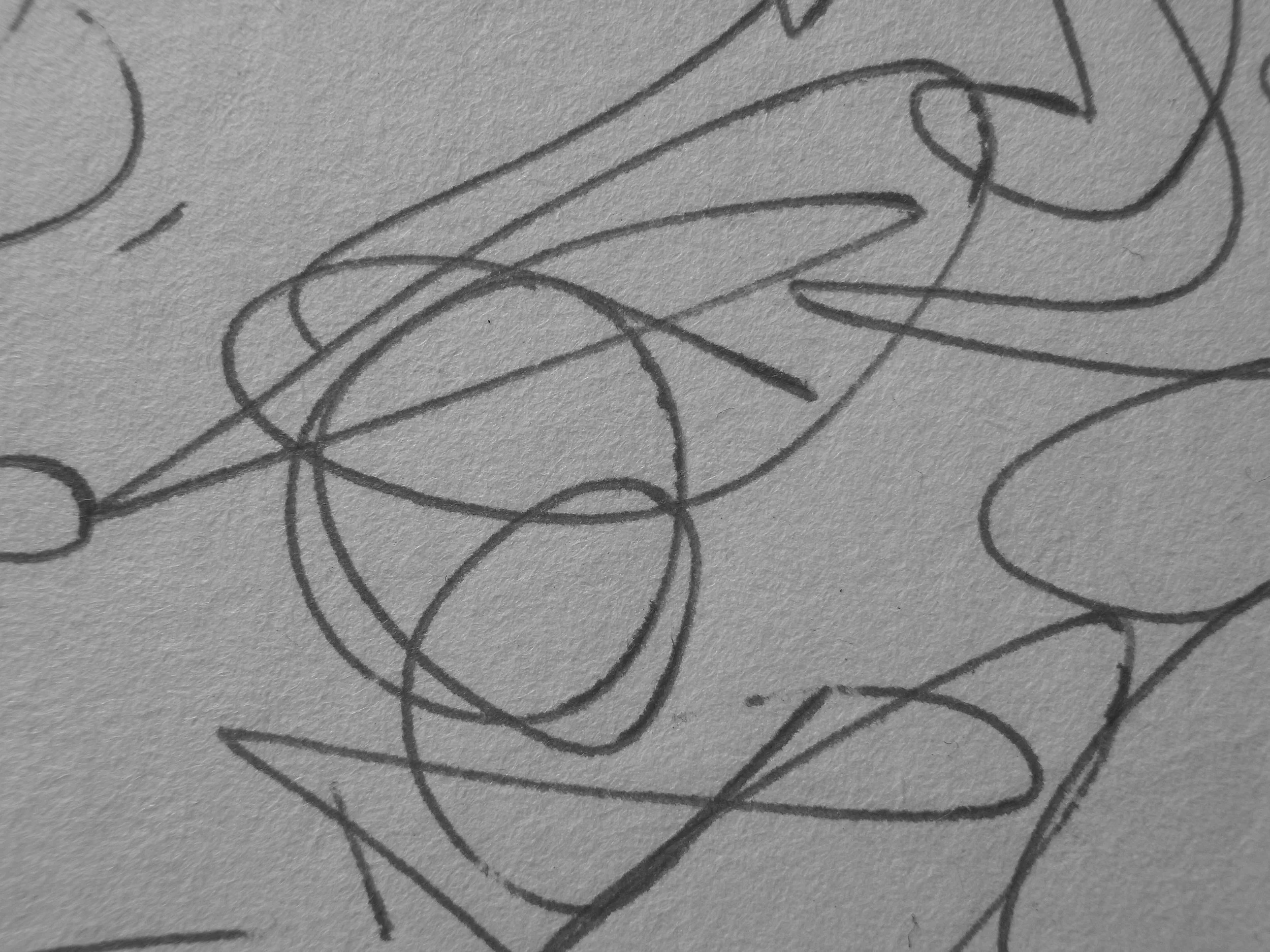
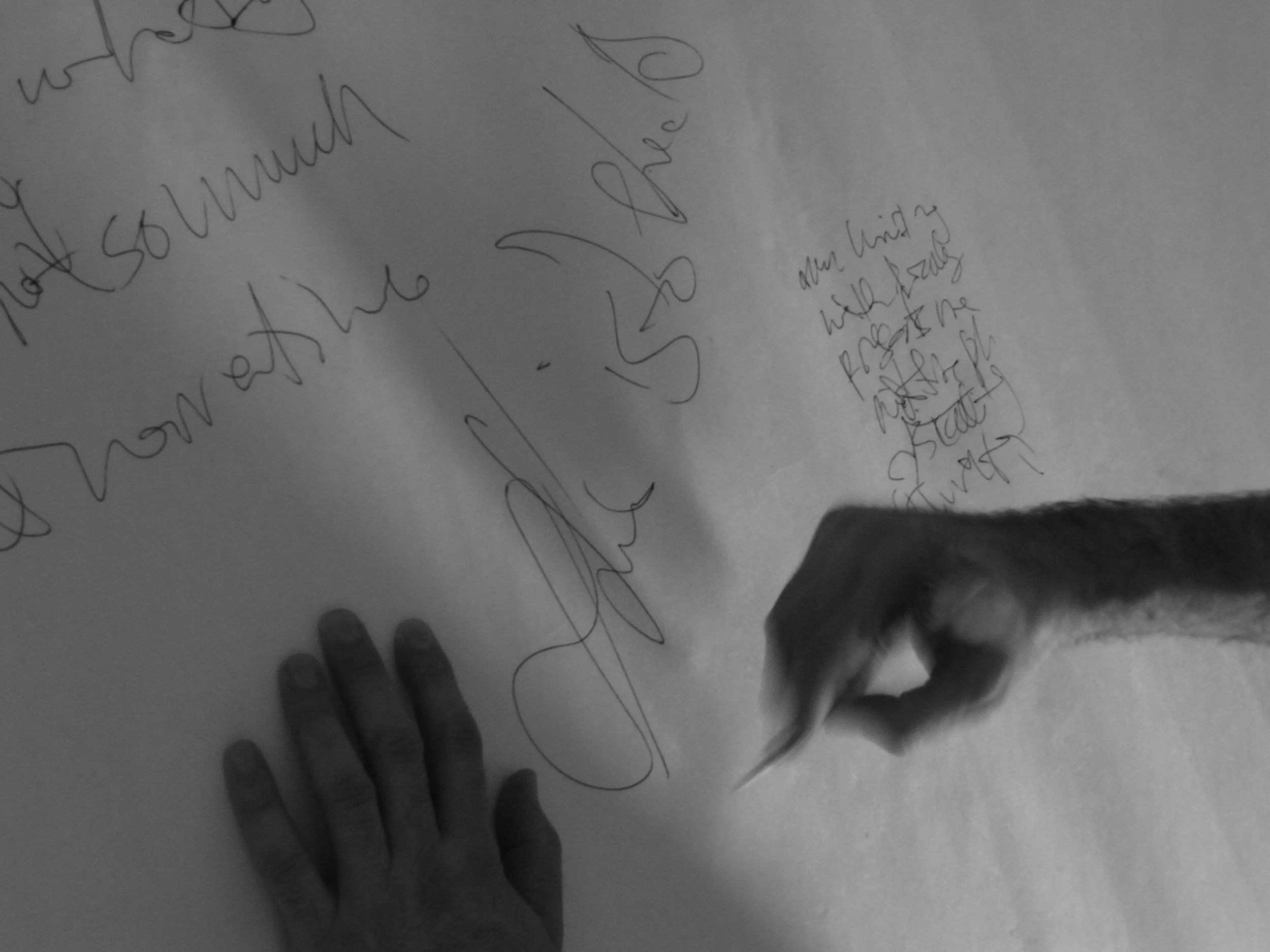
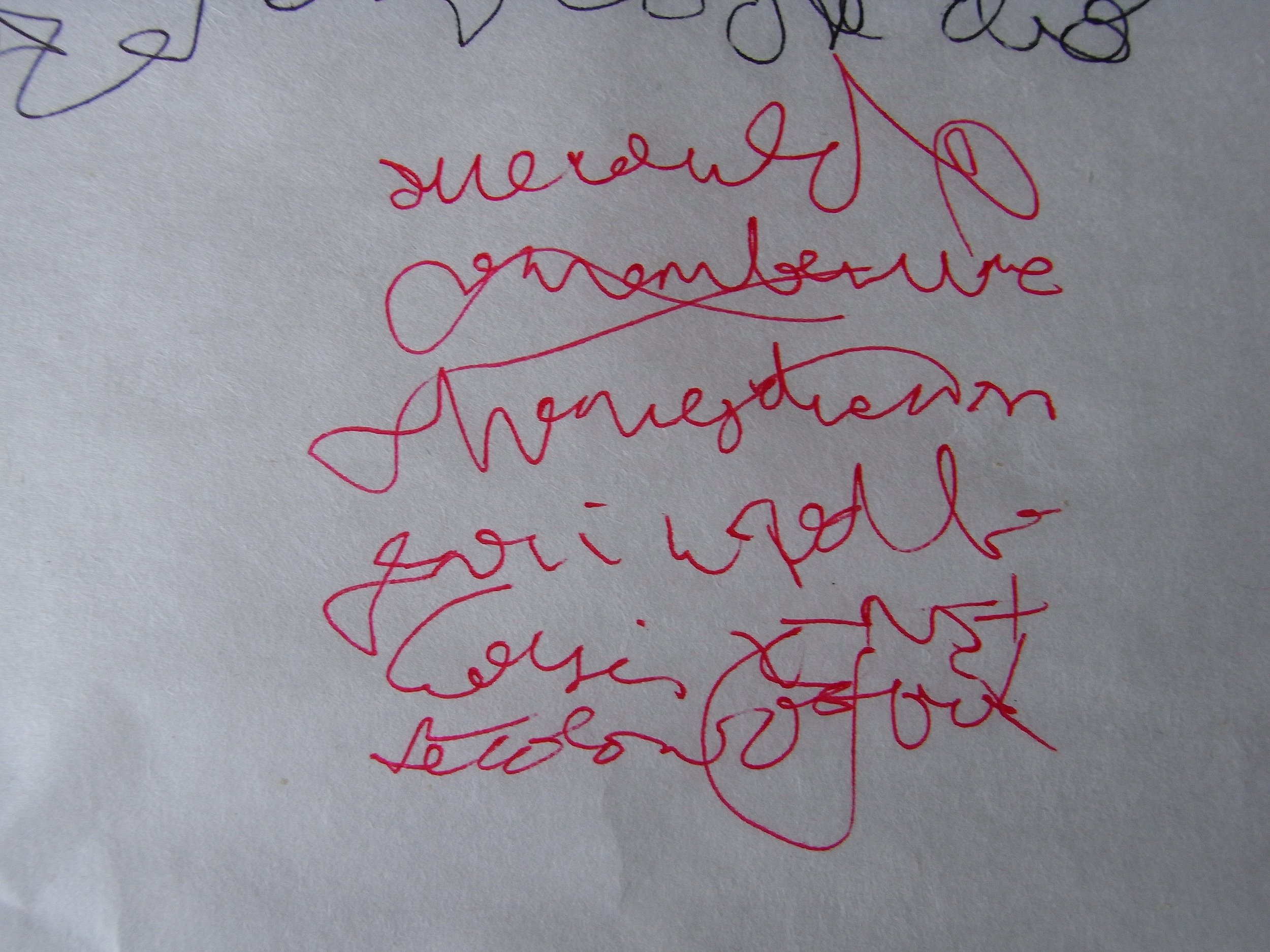
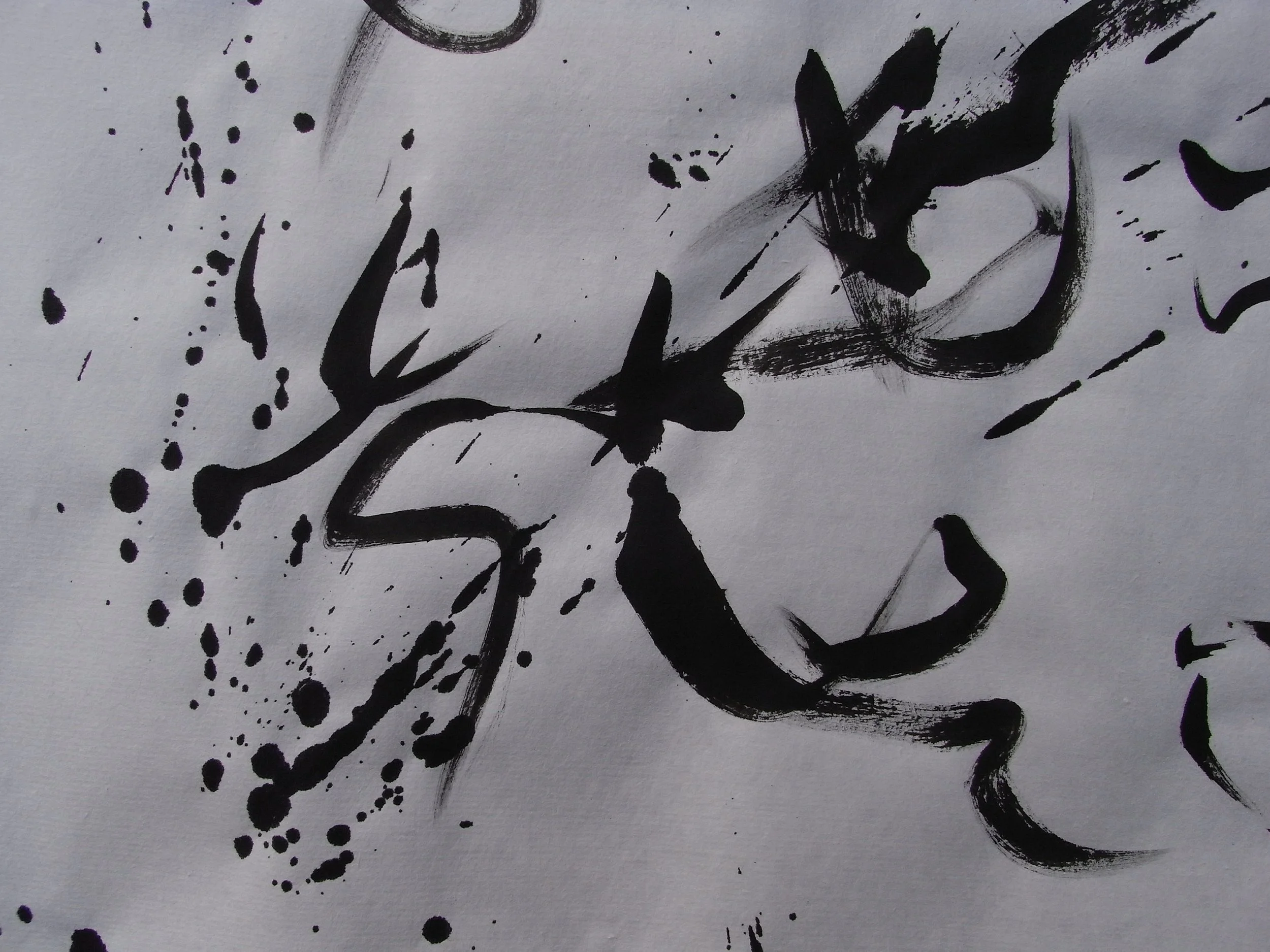
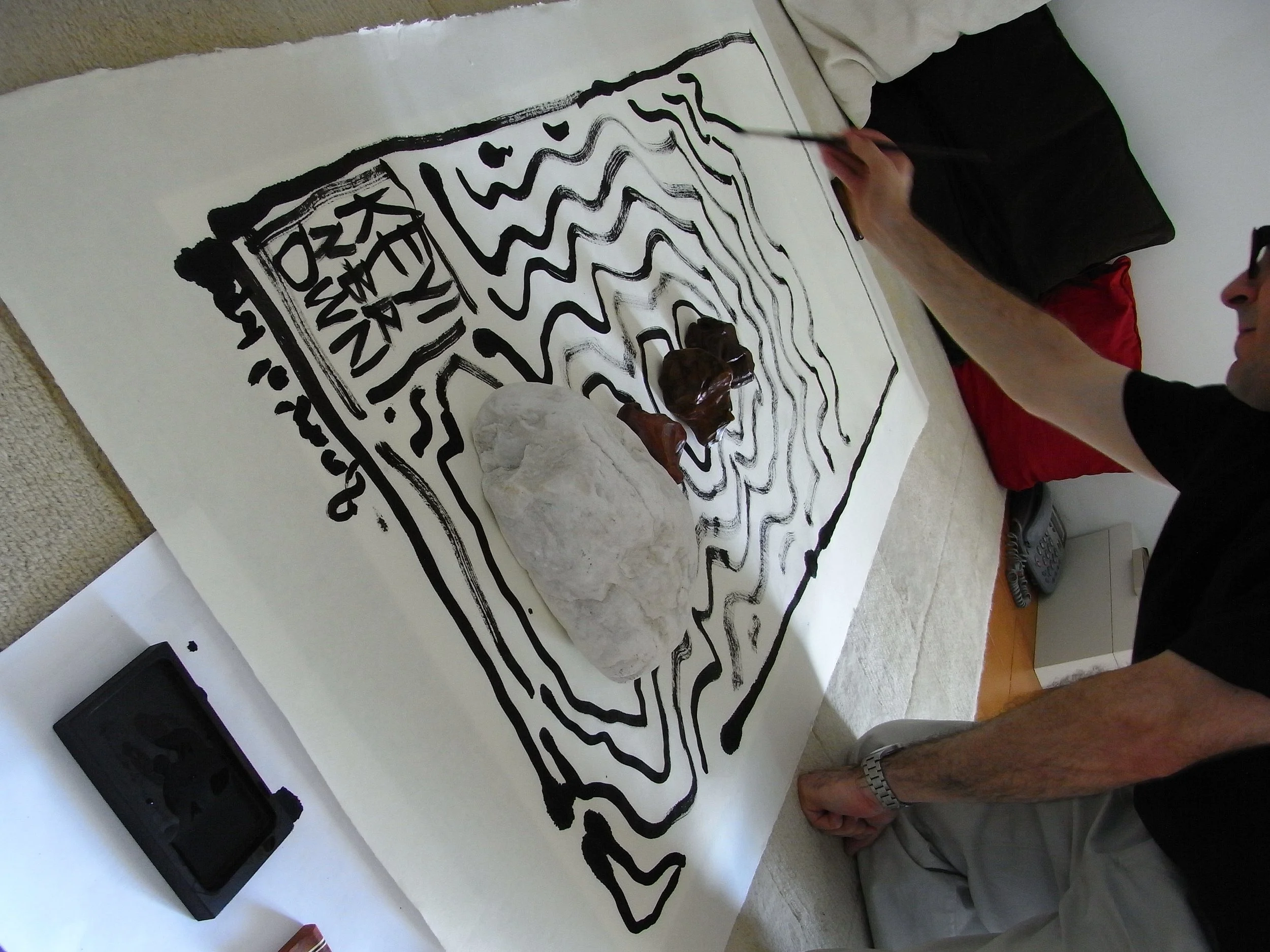
Not so long ago, people used these pointy things to make squiggly lines on this material called paper. Page after page of squiggles. Then, as a form of karmic punishment, a person called a teacher had to read all of these pages of squiggles. In desperation and protest, the teacher used a pointy thing that bled red ink and made strange symbols on top of and in the margins next to these squiggles. In France, things were a little better; it was against French law to create sloppy squiggles. Or to squiggle too far off toward the edge. In the US, we have the first amendment right of the freedom of squiggle…formally, this is called the freedom of expression. But squiggling IS expression. So our handwriting is notoriously free: unruly, polyvalent, crabbed, crouching, leaping, soaring, exaltatory! That might not be a word…but, again, freedom of expression. That means we can make up words, too, when there is a gap in the lexicon. I was one of these people. For years, I made these squiggles. Actually, for decades. My wrist hurt. I went blind…but I wear corrective lenses. I foresook many a sunny day’s delights for squiggling. I squiggled for a whale. An albatross. A blade of grass. If my name had been Bartleby, then they would have called me Bartleby the Squiggler. But I digress. Squiggling is over. We have computers and smart phones. We have AI. The onerous journeys of reading, writing and thinking are becoming optional as I sit here. Freedom. So did I waste twenty years squiggling? Well, perhaps. Perhaps not. It turns out that after a certain number of hours of doing something, you achieve a kind of automaticity…mastery…invisibility of all the moves…you acquire performative mastery. I have that. With suiggling. I am a squiggler of the highest order. And it turns out that changing the pointy thing to one that has a brush tip instead of a hard, metal ball…and changing the size of the paper from 8 ½ x 11 to something table-sized or larger changes you, too. You go through a metamorphosis from squiggler to calligrapher. Expression.
About this portfolio:
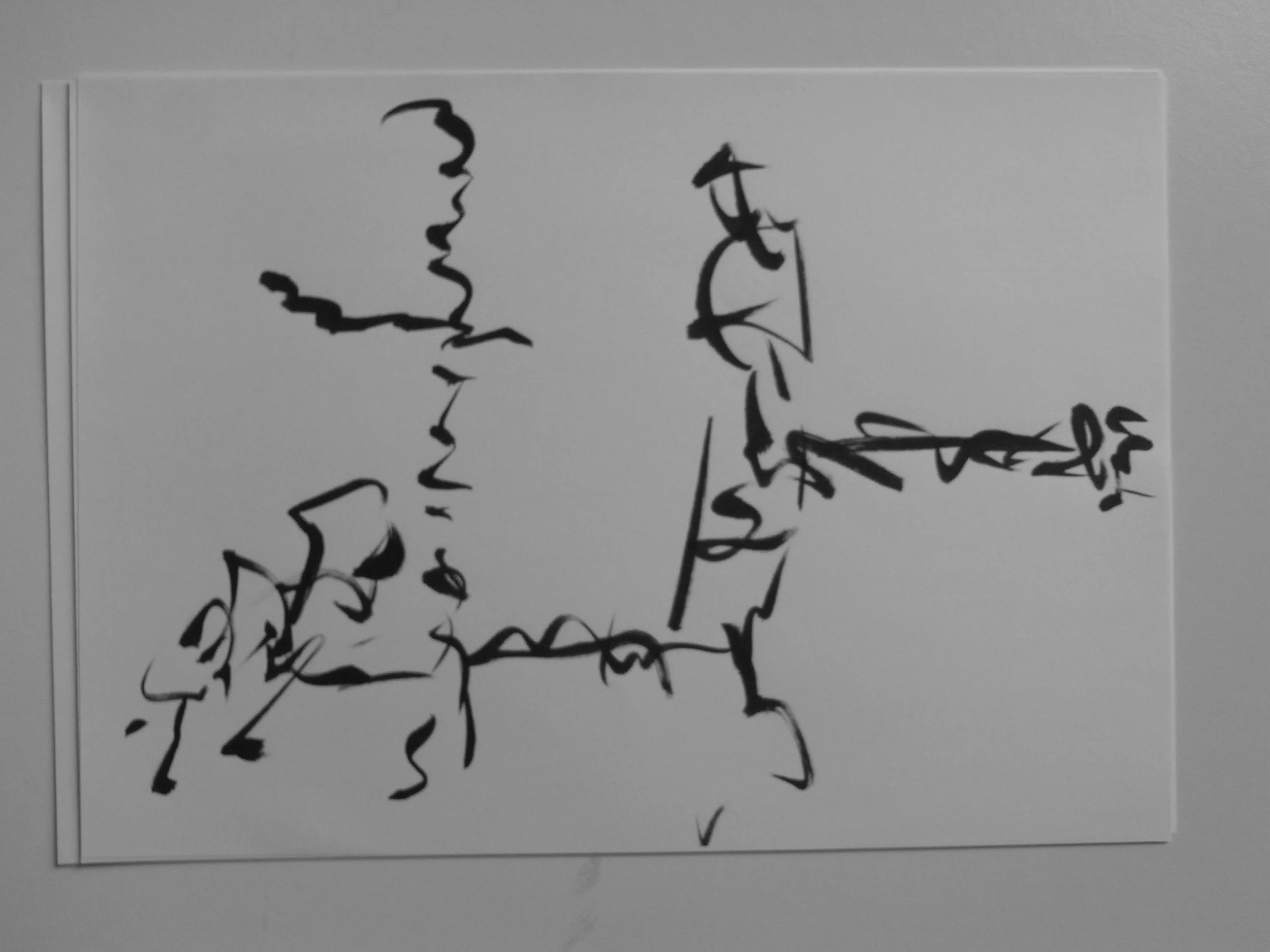
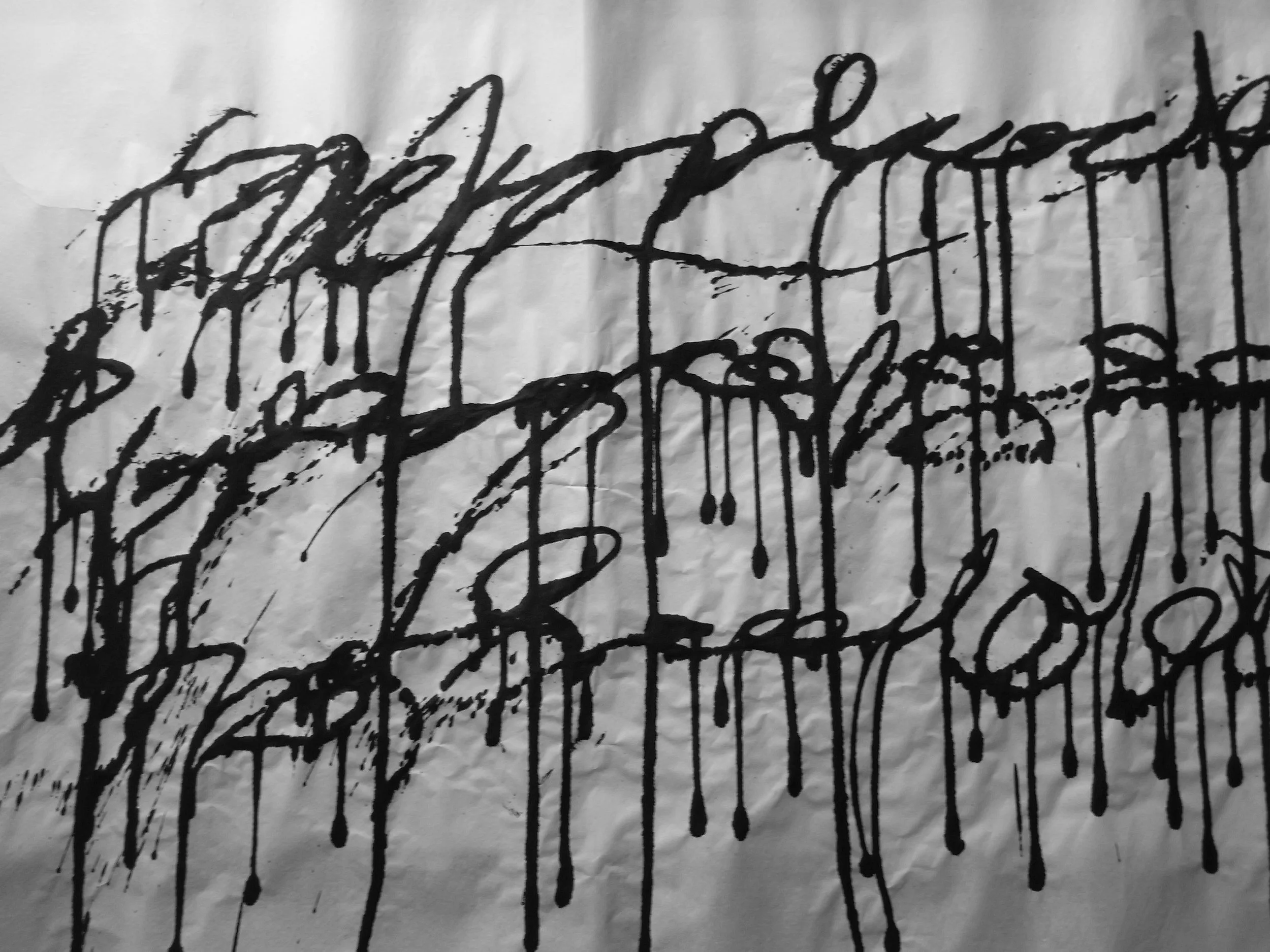
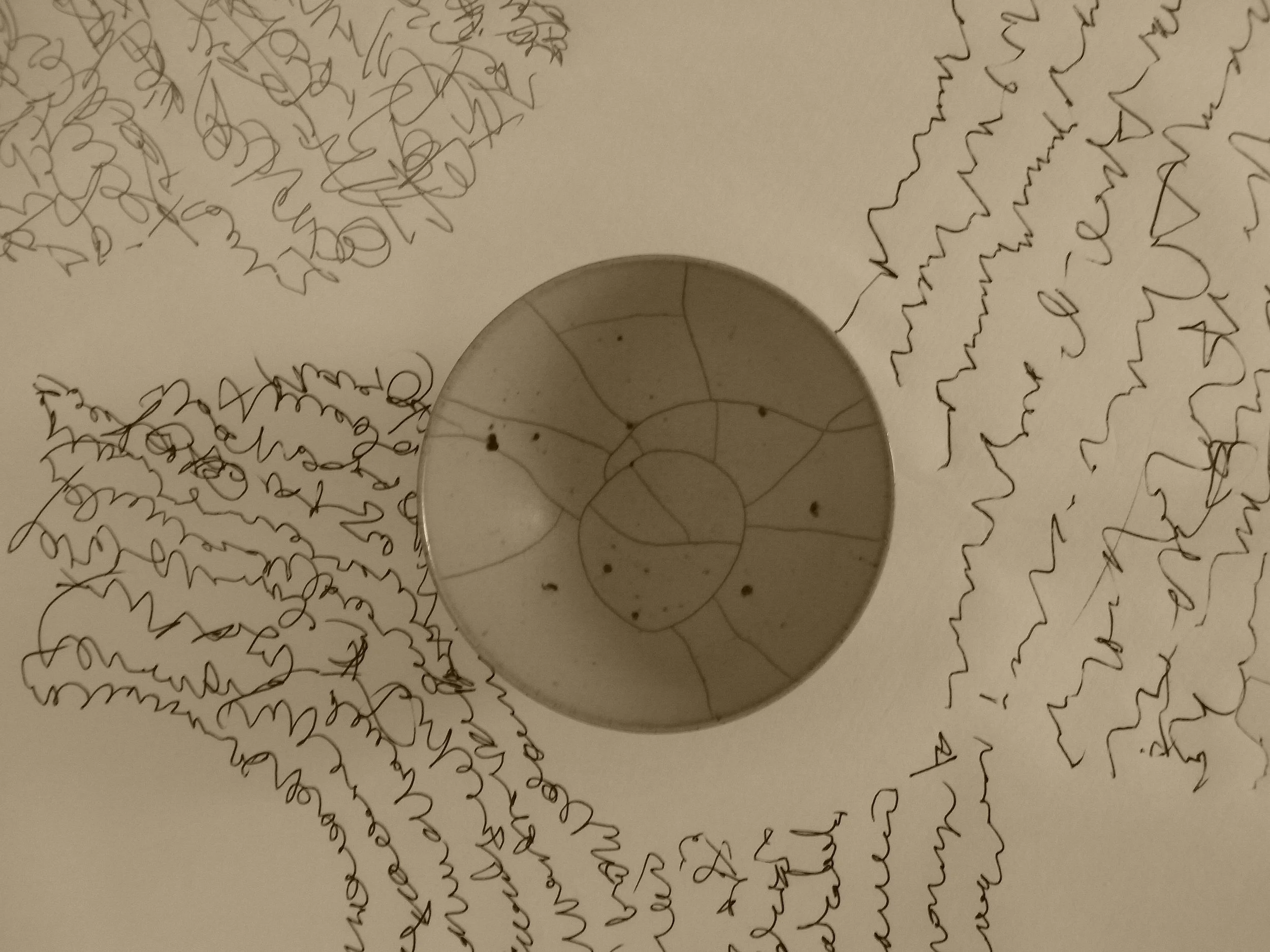
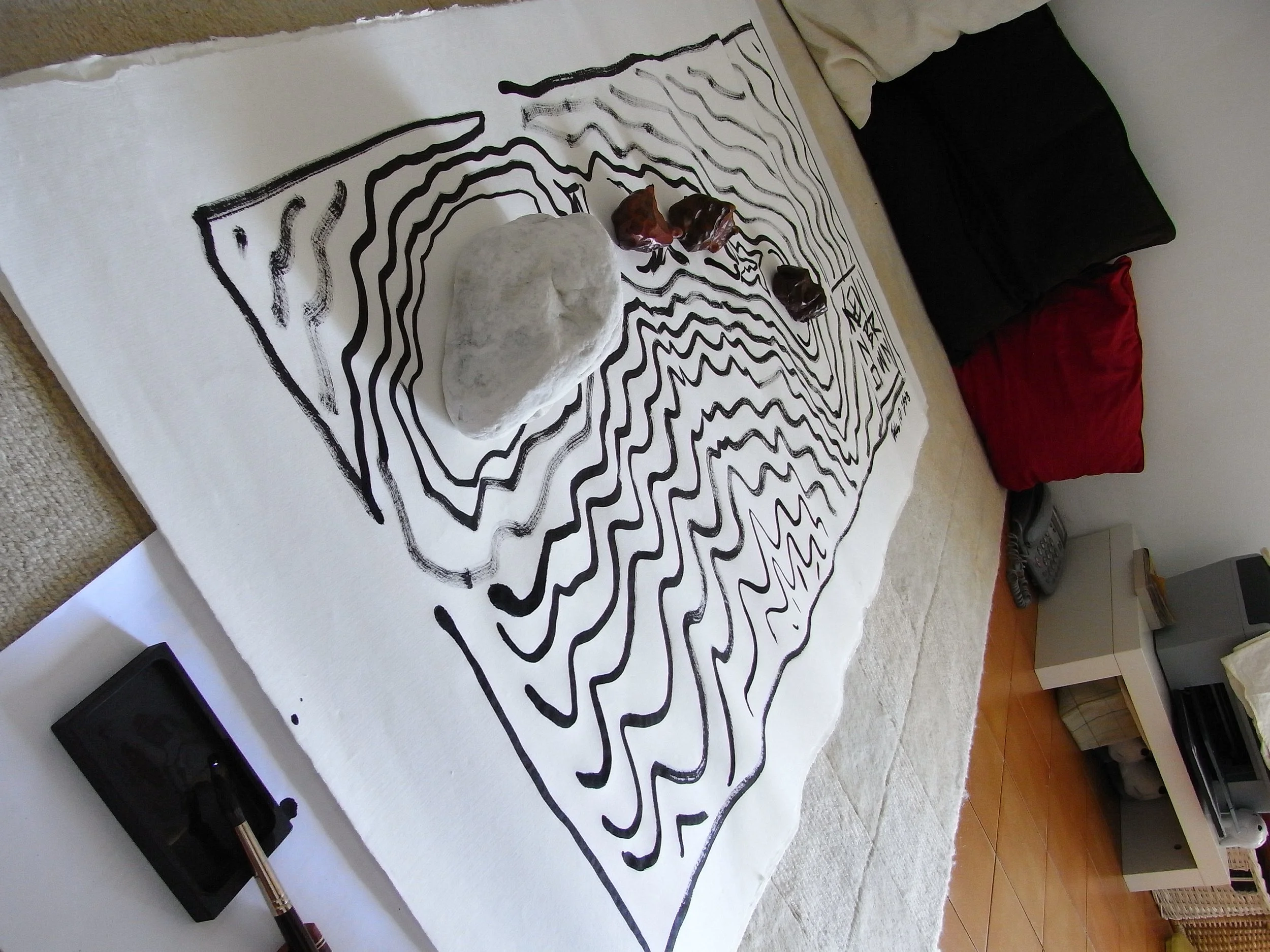
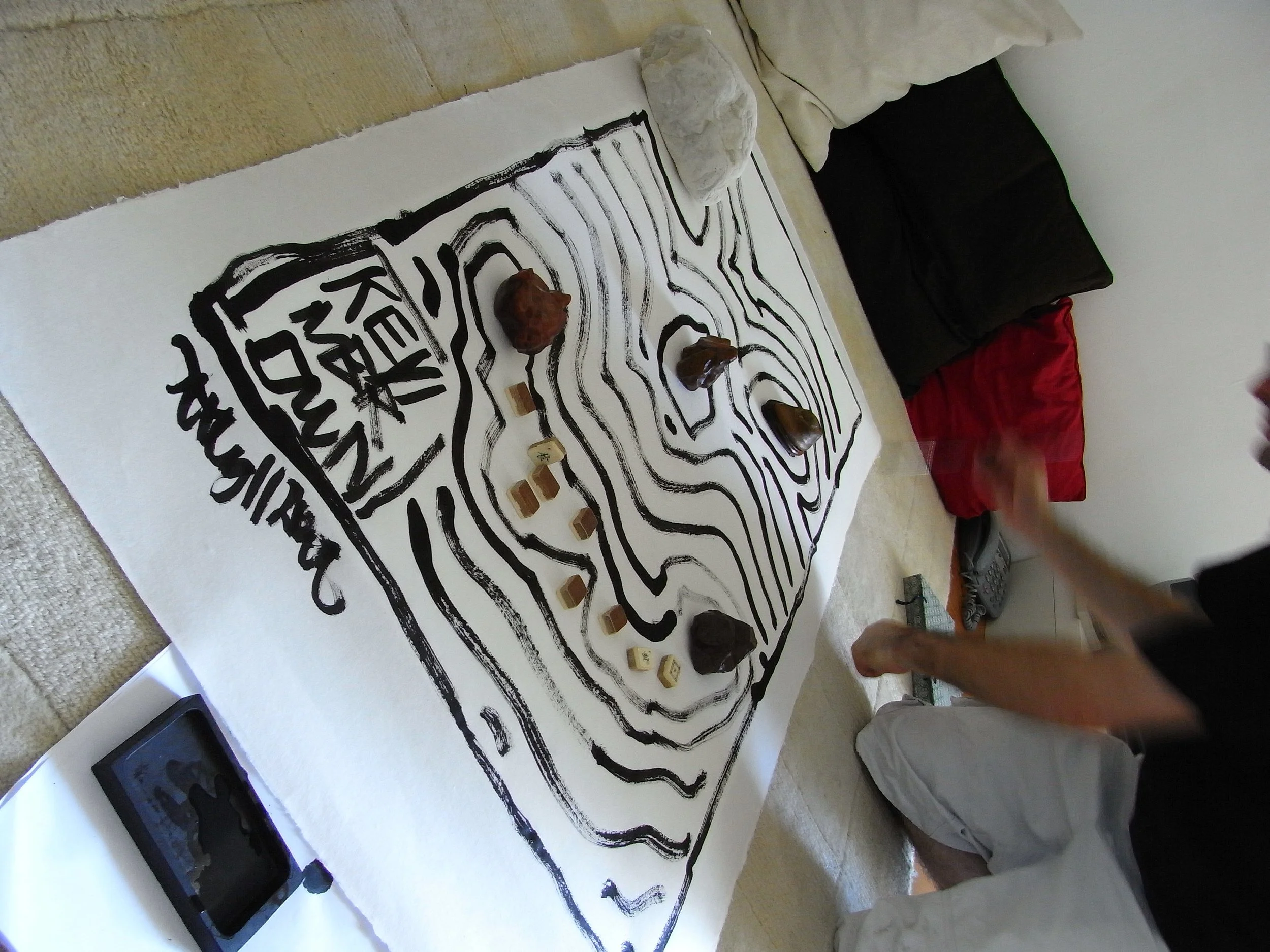
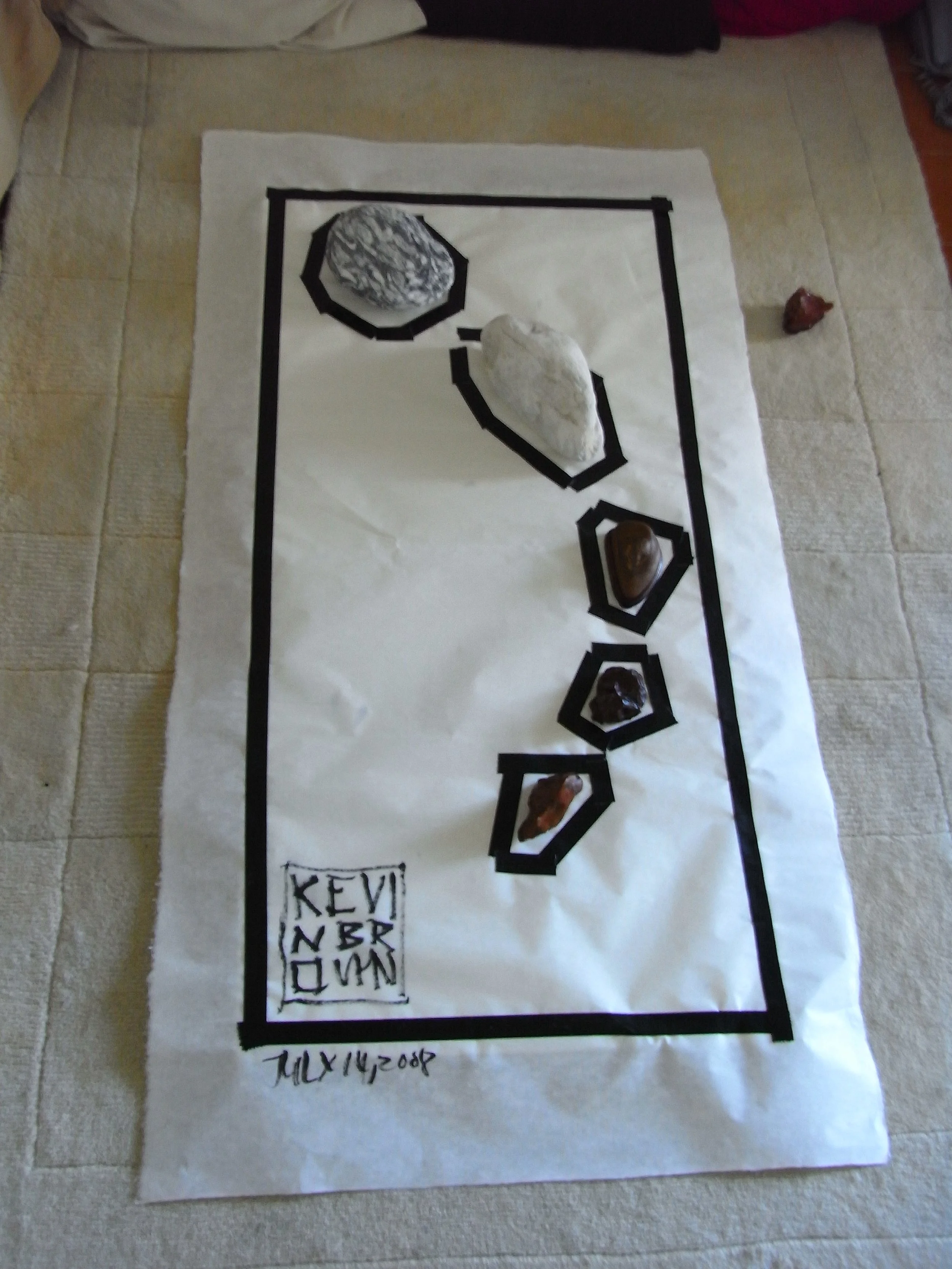
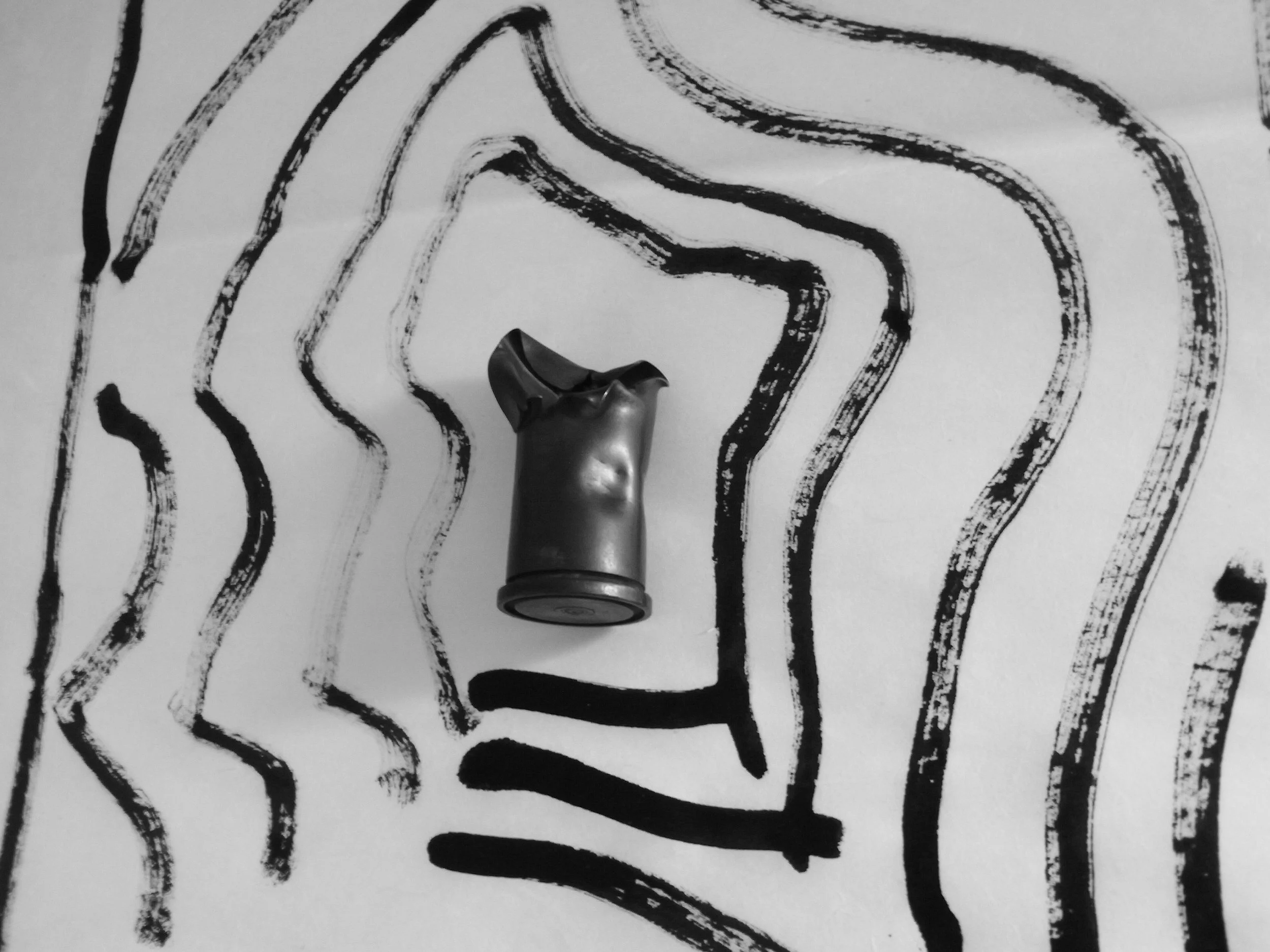
Qi. Can’t live without it. Literally. In Eastern thought, it is the life force. Dong. That’s East. The energy of the East. Rather appropriate as the core tenet of calligraphy. And also the name of the street I lived on. Up on a roof…in a rooftop house that had a it’s own corrugated tin roof. Rain sounded like all the lost golf balls of the universe somehow made their way through a cosmic wormhole directly above me and only above me in my personal, cosmic cloud a la Charlie Brown…and after the rain, the flood…the clotted rooftop drains couldn’t keep up and the water crested the 6 inch transom that was the casement for my sliding glass door. But then, after the rain, the blue sky. In between, during the gray, I would play. Qi Dong is the portfolio of work I created because I simply wanted to create work. I lived in a city that had a lot of paper stores. So I bought some paper. And I realized how essential the interplay between brush and page was for me…a kind of surrogate or a kind of truth, in terms of intimacy and self-realization. Calligraphy is transformative for the calligrapher. If it is aesthetically invigorating for the viewer, all the better—ancillary, perhaps. But also, catalytic. You, too, might lose yourself to find yourself. Get some paper. Get to work again. Or is it play?
About the Calligrapher:
Kevin Brown is the nom de brosse (and the real name) of a California born artist who cut his inky teeth in Taipei…calligraphy is described as a mirror of the mindset of the artist…thus, it is always self-portraiture. Of the soul. It is intimate. It is vulnerable. It can be fierce or fearful. It can be ecstatic or agonistic. Does the calligrapher write the calligraphy, or does the ink beget the artist? Which way does it flow? Perhaps we rise from the two-dimensional skeins and loops of asemic cursive as a golem did from the mud…as a kind of savior of the self…for any creative act that is so internal to the core of the artist is also a kind of salvation. Not for others. Although an artist builds a church of the self, there is nothing messianic about it—for art is something that the artist does for the artist’s own survival…no, to thrive…for the artist’s sur-thrival…that is another made up word. But it is necessary. Because there is more to life than survival. There is the full throatedness and full-throttle joy of fullfilment in the moment of an act Without this, naught.